



Lane Kiffin’s Departure from Ole Miss Sparks Controversy, Quick Succession Plan
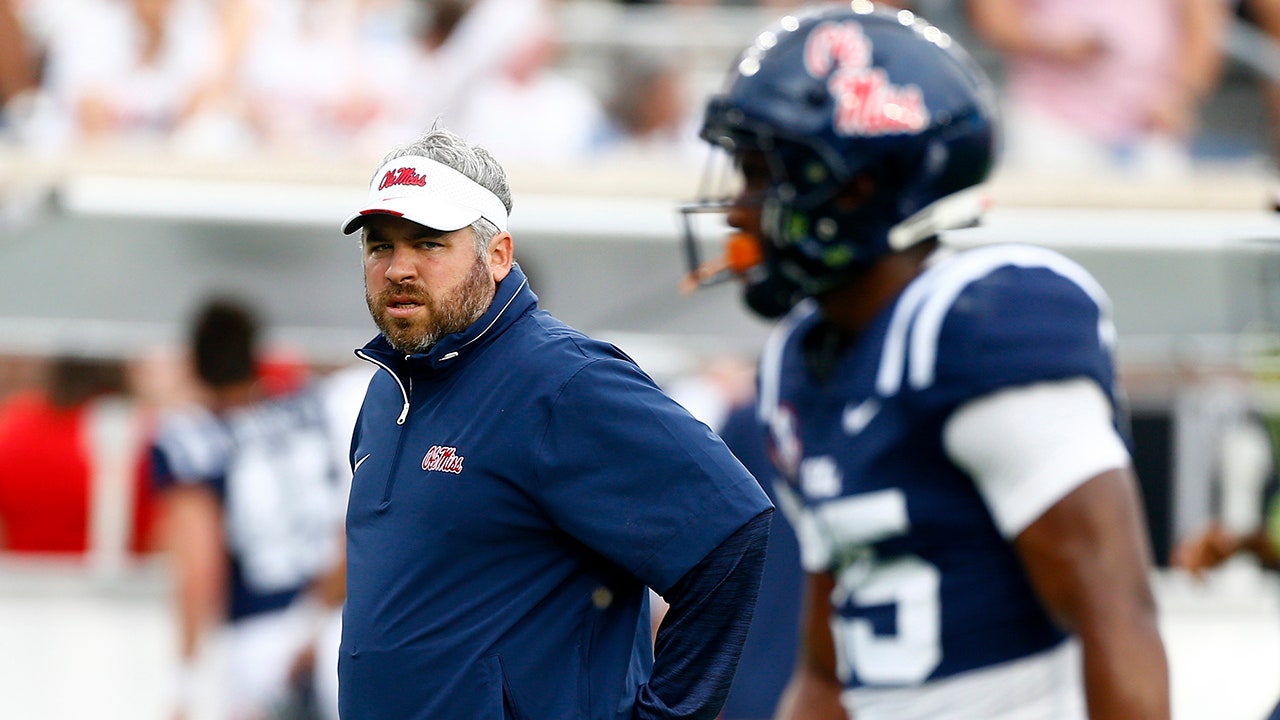
In a dramatic conclusion to a closely watched saga in college football, Lane Kiffin has officially ended his six-year tenure as Ole Miss head coach, boarding a flight to Baton Rouge on Sunday before being formally introduced as LSU’s new head coach on Monday. The move sent ripples throughout the college football landscape, especially considering the timing—with Ole Miss sitting at an impressive 11-1 record after defeating Mississippi State in the Egg Bowl and positioned as the seventh-ranked team with College Football Playoff aspirations. The Rebels acted swiftly in response to Kiffin’s departure, promoting defensive coordinator Pete Golding to head coach, a decision that has generated significant discussion in sports media circles.
The transition comes at a pivotal moment for Ole Miss football. Despite not qualifying for the SEC Championship Game in Atlanta, the team’s remarkable season has put them in contention for the College Football Playoff—a historic opportunity that now falls into Golding’s hands. Kiffin expressed disappointment at not being able to complete what he called “a historic six-season run” with the team through the playoffs, suggesting in his statement that he had hoped to lead Ole Miss through their playoff journey with “guardrails in place to protect the program in any areas of concern.” The abrupt nature of his departure followed a reported meeting with Ole Miss athletic director Keith Carter and school chancellor Glenn Boyce, after which Kiffin learned his time with the Rebels had concluded.
Golding’s elevation to head coach has not been without scrutiny. Sports commentator and podcaster Bomani Jones, formerly of ESPN, directed criticism toward Kiffin’s handpicked successor, particularly questioning Golding’s readiness based on his performance as defensive coordinator. In a particularly pointed comment that raised eyebrows, Jones remarked, “I had known him by name. I saw a picture of him and was like ‘There’s no way that man is a head coach.'” Despite such criticism, Golding brings nearly two decades of coaching experience to the role, though this marks his first opportunity to lead a program competing in a Power Four conference.
The timing of this coaching change creates a unique situation for Ole Miss’s upcoming postseason appearance. Whatever bowl game or playoff contest the Rebels participate in later this month will serve as Golding’s debut as head coach—a high-stakes introduction to his new role with significant implications for the program’s immediate future and perception. Meanwhile, LSU’s decision to pursue Kiffin came after they parted ways with Brian Kelly in late October, following a disappointing home loss to Texas A&M, indicating the Tigers were strategically targeting Kiffin as their preferred replacement.
This coaching carousel represents the continuing volatility in college football’s leadership landscape, where success, ambition, and opportunity frequently intersect to create surprising shifts in program direction. Kiffin’s move to LSU follows a pattern in his career of making bold transitions, having previously coached at Tennessee, USC, and Florida Atlantic before his successful rebuilding of Ole Miss into a national contender. The suddenness of his departure, particularly with Ole Miss on the cusp of potentially their most successful season in recent memory, highlights the business aspects of college football that often operate behind the scenes of on-field competition.
For Ole Miss, the promotion of Golding signals a desire for continuity amid change, hoping to maintain the momentum built under Kiffin’s leadership while establishing a new era for the program. For LSU, securing Kiffin represents an aggressive move to return to national prominence after a disappointing stretch under Kelly. As both programs navigate these transitions, the coming weeks and months will reveal much about their respective futures in the increasingly competitive SEC, which itself is undergoing significant transformation with the addition of Texas and Oklahoma. The situation serves as yet another reminder of college football’s unpredictable nature, where coaching decisions can drastically alter the trajectory of multiple programs in a matter of days.